
Understanding the Recent Fed Rate Cuts and Their Impact on Mortgage Rates
TLDR: Despite recent Fed rate cuts, mortgage rates have unexpectedly increased. This blog post explores the reasons behind this phenomenon, focusing on economic indicators and Fed Chair Jerome Powell's statements that influenced market reactions.
The Federal Reserve has recently cut interest rates again, but contrary to expectations, mortgage rates have increased. This has left many realtors and consumers puzzled. In this blog post, we will break down the events surrounding the Fed's rate cuts and explain why mortgage rates have not followed the anticipated downward trend.
The Context of Rate Cuts
For the past three years, many Americans have been eagerly awaiting lower mortgage rates. Historically, when the Fed lowers rates, it is expected that mortgage rates will decrease as well. However, this has not been the case during the last two rate cuts, which occurred on September 17 and October 29. Let's delve into these events to understand the underlying reasons.
The September Rate Cut
On September 17, the Fed cut rates by a quarter point. This move was largely anticipated by the market and had already been factored into mortgage rates. However, instead of decreasing, mortgage rates increased. The reason for this unexpected rise was a better-than-expected jobless claims report that surprised the market.
Economic Indicators and Market Reactions
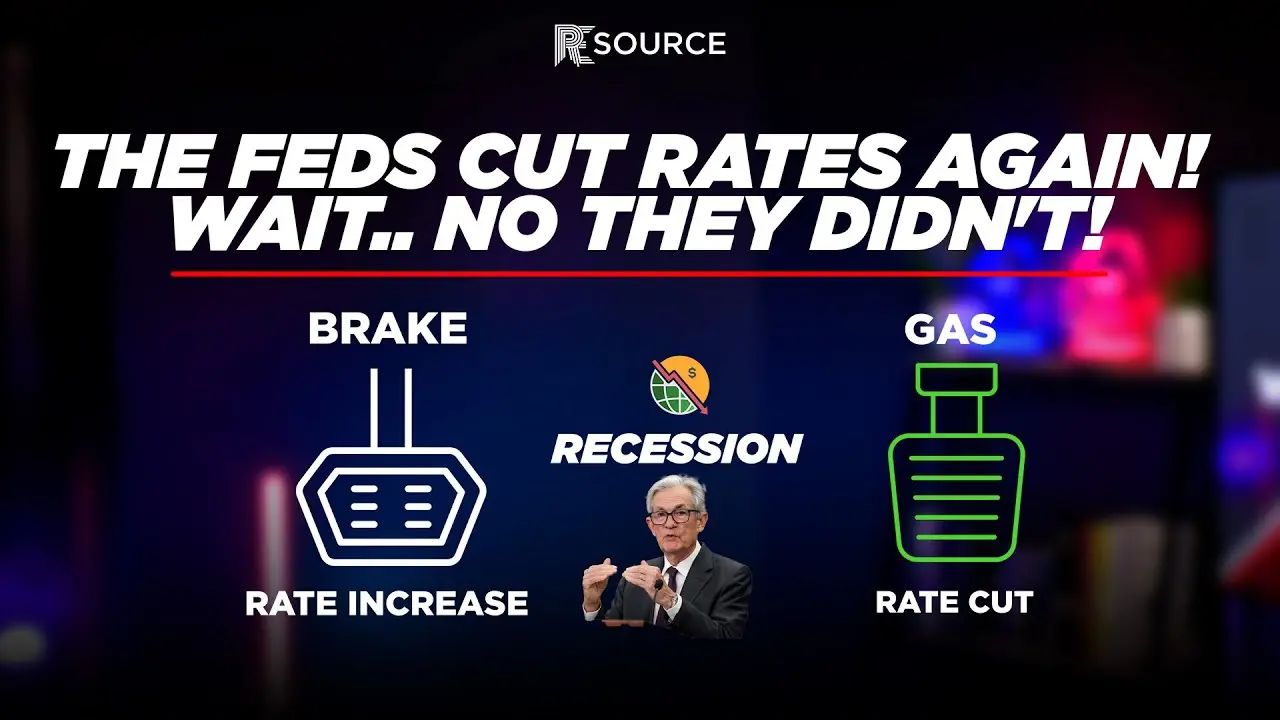
The Fed uses rate cuts and increases as tools to manage the economy. A rate cut acts as a gas pedal, intended to stimulate economic activity when the economy is sluggish. Conversely, a rate increase serves as a brake to cool down an overheating economy, often indicated by rising inflation.
In September, the jobless claims report indicated low unemployment, suggesting a robust economy that did not require a rate cut. This single data point spooked the markets, leading to an increase in mortgage rates despite the Fed's intentions.
The October Rate Cut
Fast forward to October 29, when the Fed announced another quarter-point rate cut. Similar to September, the market had already priced in this cut, with a 98.9% certainty that it would occur. However, once again, mortgage rates rose instead of falling.
The Influence of Jerome Powell's Statements
The key difference this time was not an economic report but rather the comments made by Fed Chair Jerome Powell during the press conference following the rate cut announcement. Powell indicated that the anticipated rate cut in December was not guaranteed, which caught the market off guard. His remarks suggested uncertainty about future monetary policy, leading to a spike in mortgage rates.
As Powell spoke, mortgage-backed securities began to decline, and mortgage rates increased by 30 basis points, contrary to the expected decrease of 25 basis points. This reaction highlights how sensitive the mortgage market is to the Fed's communications and the overall economic outlook.
Conclusion
The recent Fed rate cuts have not resulted in lower mortgage rates as many had hoped. Instead, economic indicators and the Fed Chair's statements have played significant roles in shaping market expectations and reactions. Understanding these dynamics is crucial for realtors and consumers alike.
As we continue to navigate these economic changes, it is essential to stay informed and share this knowledge with others who may benefit from it. The complexities of monetary policy and its impact on the housing market are vital for making informed decisions in these uncertain times.